
Arrest Warrants in Sibley County
Need to know how a Sibley County arrest warrant works? A judge in District Court signs one, and only after a prosecutor files a complaint. The judge must find probable cause first. Once signed, the warrant lets law enforcement take the named person into custody, and the case sits in the county court system. Which agency actually serves it depends on the case. Minnesota's criminal rules spell out how a complaint, a summons, and a warrant fit together. A prosecutor can charge a case and request a summons instead of an arrest, and the court decides which process fits the file. That choice appears on the docket. It also explains why two similar charges can produce very different first steps. Keep one caution in mind. An arrest warrant is a charging-process document tied to a case file, and a name search alone never confirms one. The issuing court is the only place to verify an active warrant in Sibley County.
Sibley Arrest Warrant Affidavit
The complaint is where a Sibley County felony or gross misdemeanor case begins. It states the charge and the supporting facts. It also carries, or comes with, the sworn statement that supplies probable cause, and a judge reviews all of it before issuing process. Form 8 shows that same structure from the other side. Its blank fields cover the sworn application, the judge's determination, and the warrant order that follows. The form handles the appearance warrant used after someone fails to respond to a summons or citation. An arrest warrant on a complaint follows the same arc of application, review, and order. That is the paper trail behind any Sibley County arrest warrant, and it is what the court file will show.
What a Sibley County Arrest Warrant Contains
The warrant is short, and the case file carries the detail.
| Issuing Court | Sibley County District Court, First Judicial District |
|---|---|
| Court File Number | The key for every later question and motion |
| Charged Offense | The offense named in the complaint |
| Issuing Judge | The judicial officer who reviewed and signed the order |
| Order Language | The direction to arrest and bring the person before the court |
| Appearance Instruction | The prompt-appearance direction, commonly tied to a 36-hour rule |
| Service and Return | Whether the order was served, when, and by which agency |
Who Serves a Sibley County Arrest Warrant
The Sheriff's Office serves Sibley County warrants and runs the jail and dispatch. City police handle local matters. A contract map decides who answers. Sibley County provides full contract policing for New Auburn and Green Isle, plus part-time contracts for Winthrop and Arlington. Gaylord, Gibbon, and Henderson keep their own departments. A warrant tied to a city case may be served by that department or by the Sheriff, depending on the assignment.
Sibley County Sheriff's Office
419 Harrison Street, PO Box 102
Gaylord, MN 55334
507-237-4330
The agency serving a Sibley County warrant is not always the one that issued it. The court record remains the place to confirm the case.
How Sibley County Arrest Warrants Are Served
Service means an authorized officer takes the person named in the order into custody under the warrant. After an arrest in Sibley County, the person goes before a judge. The case then moves to the release or bail stage. The Sheriff handles booking, and the jail roster shows custody information from there. Timing varies with the case and the assignment. A felony warrant may be a priority while a lower-level matter waits, and a person held in another jurisdiction stays there until the process is worked out. The public pages publish no service schedule or warrant-unit window, so ask the Sibley County Sheriff's Office directly.
Sibley Search Warrant vs Arrest Warrant
The two orders authorize different acts. Mixing them up sends a reader hunting the wrong Sibley County record, and the state files them through separate routes.
| Point | Arrest Warrant | Search Warrant |
|---|---|---|
| What it authorizes | Taking a person into custody | Searching a place, person, or thing |
| Trigger | A complaint and probable cause | Probable cause to believe evidence is present |
| Who it names | A person | A location or item, and sometimes a person |
| Public listing | Case docket and case file | Administrative file-number route |
A search warrant says nothing about whether a person is wanted.
Arrest Warrant vs Summons vs Bench Warrant
Minnesota courts pick from three starting points when a case arrives. The choice shapes everything after it, and each option leaves a different trail in Sibley County court records.
| Process | How It Starts | What Follows |
|---|---|---|
| Summons | A charge is filed and the court orders an appearance | A scheduled court date without an initial arrest |
| Arrest warrant | A charge is filed with probable cause and the court orders an arrest | Custody, booking, and a first appearance |
| Bench warrant | An existing case has a missed appearance or noncompliance | An order to bring the person before the court |
Sign-and-release warrants form a narrow fourth category in Sibley County. A qualifying missed summons carries a new date and no arrest authority.
Sibley and Federal Arrest Warrants
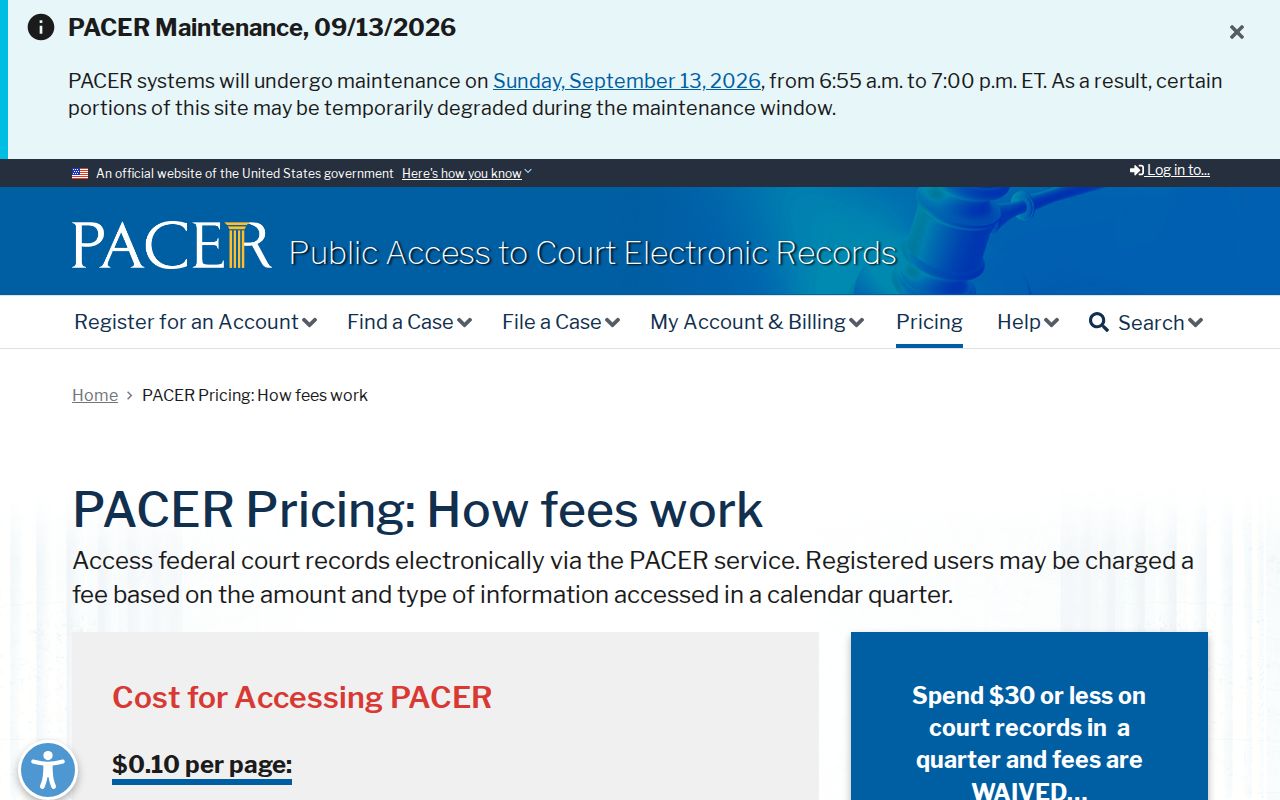
A Sibley County warrant search will not settle a federal question. Federal criminal process runs through the U.S. District Court for the District of Minnesota, served by the U.S. Marshals Service or federal agents. That district spans all of Minnesota, so its clerk and courthouses sit outside Sibley County. Records there move through a separate system called PACER, which bills by the page, by the document, and even by each search-results page. A fee waiver applies when quarterly usage stays low. Still, PACER offers no simple public warrant check, and sealed complaints and restricted filings stay out of view entirely. The federal court access fee page explains how that pricing works, so treat it as your entry point for federal record costs rather than as any kind of warrant list.
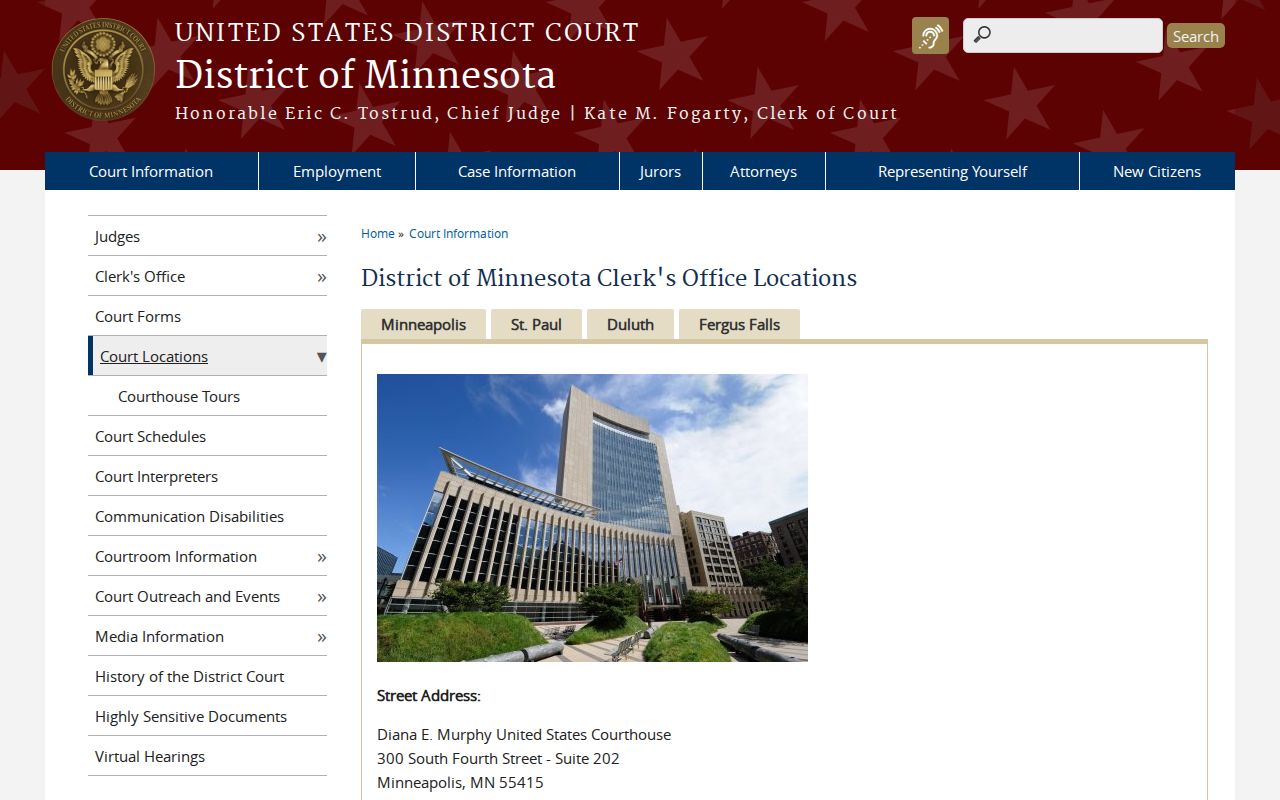
A clean Sibley County result says nothing about federal process, which is separate in both cost and scope. The District of Minnesota courthouse page lists those locations.
Take questions about federal process to federal counsel, the federal clerk, or the U.S. Marshals Service rather than to any Sibley County office.
What to Do If There's a Warrant for You
Do not show up at the courthouse unannounced. Do not try to outrun service either. Instead, call Sibley County Court Administration and ask what the case requires of you. A lawyer can reach out to the court, file a motion, arrange an appearance, and walk you through the custody and bond risk before you act.
Important: Minnesota courts warn that a person who appears with a warrant may be taken into custody. Ask about the safe process before you travel to Gaylord.
Start with Court Administration before you act. Ask the clerk about bond, counsel, a recall, or a new court date. Also ask about sign-and-release eligibility and transport. Sibley County publishes no bond schedule, walk-in procedure, or warrant-division window, so confirm anything you read online with an official before relying on it. The home page gathers the resolving steps in one place.
Sibley Warrant Questions Before You Appear
Work through these questions on the phone before anyone drives to Gaylord.
- Which court issued the warrant, and is it still active or has it been served
- Is a bond set, and where and when may it be posted
- Will the court accept a new setting or a motion instead of a walk-in
- Does the case qualify for sign-and-release treatment
- Is there a lawyer who should make the first contact
Two Sibley County calls settle most of it. Dial Court Administration criminal and traffic at 507-237-4055 or 507-237-4056; for custody and service, call the Sheriff's Office at 507-237-4330.